
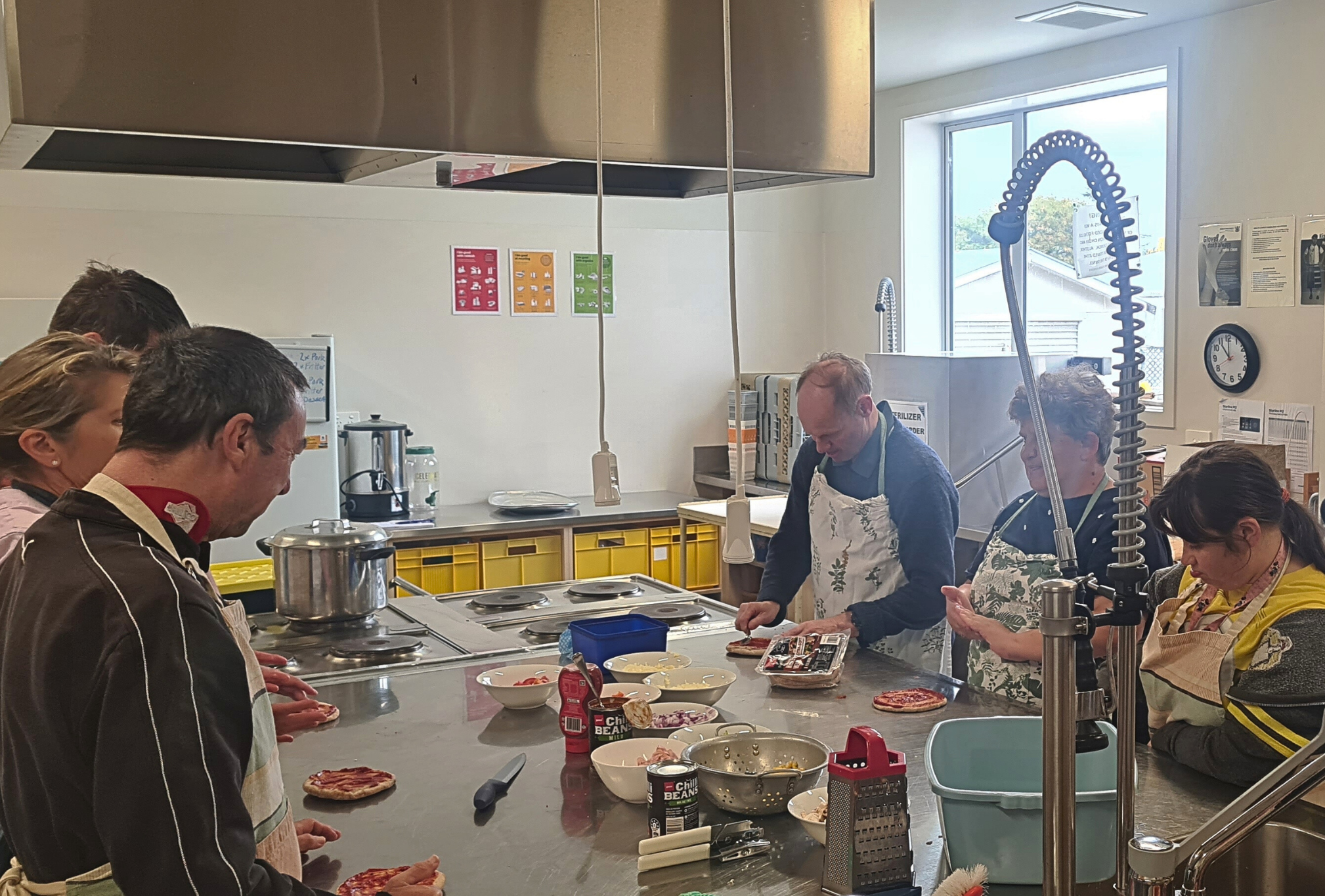
Term 1 brought a few more cooks into the kitchen as Risingholme launched an 8-week Basic Cooking course in partnership with Hōhepa Canterbury.
Hōhepa supports people living with intellectual disabilities and encourages them to live fully engaged lives. The decision to partner with them to develop the Basic Cooking course was an easy decision, says Risingholme Director Lynda Megson. “Working in something as varied as the Adult Community Education (ACE) sector means there are always potential opportunities to collaborate in order to meet the needs within various communities around our city. We’re so pleased to see this collaboration underway and to be supporting the learners in such a practical way that will certainly benefit them long after the course concludes.”
The recipe for learning
Each week, learners arrive at the kitchen ready to create a meal from scratch. Each class covers the whole cooking cycle from prep to plating, culminating with everyone sitting together at the table to share their meals together before heading back into the kitchen to tidy up.
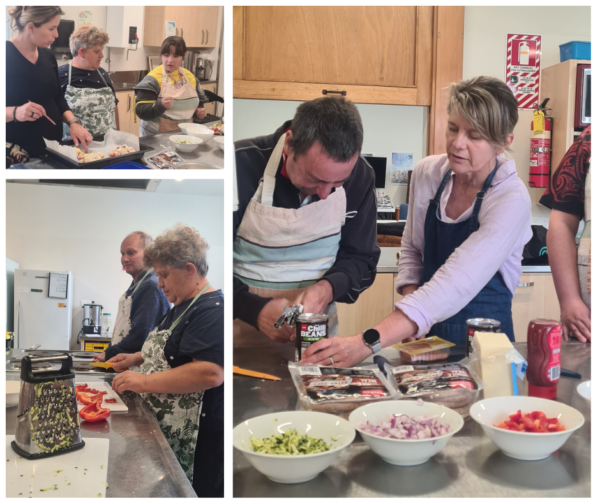 The “basic” is really the key for a course like this, notes cooking tutor Karen Ogg, who has been supporting the learners throughout these classes. “Cooking is a lifelong skill that is rooted in some key fundamentals. Basics like safe knife skills, using kitchen equipment, measuring, sequencing and monitoring heat and times, and being familiar with different food preparation techniques like boiling, baking, and simmering are all foundational. Each week’s recipe presents a new challenge for the learners and adds a novel element to the course, but at the same time continues to reinforce those basics which are at its core”.
In addition to building hands-on cooking skills, the course centres around making tasty, achievable recipes that are healthy and affordable. Recipes learners have created include mini quiches, pizzas, nachos, stuffed baked potatoes, and vege-packed minestrone soup from scratch. Some recipes—like the popular pita pizzas—are repeated after a few weeks to hone some of the skills already learned and to get learners thinking about how recipes can be flexible by using slightly different ingredients each time.
How a kitchen becomes a classroom
A shared kitchen makes for a powerful classroom where learners can encourage each other and work together towards a shared outcome. Tasks are delegated and the cooking load shared among participants which naturally helps build communication and cooperation skills. Although there is a collaborative element in all of Risingohlme’s cooking courses, The Basic Cooking course foregrounds this aspect and is tailored specifically to the needs of Hōhepa’s learners by integrating tasks that encompass wider hospitality skills.
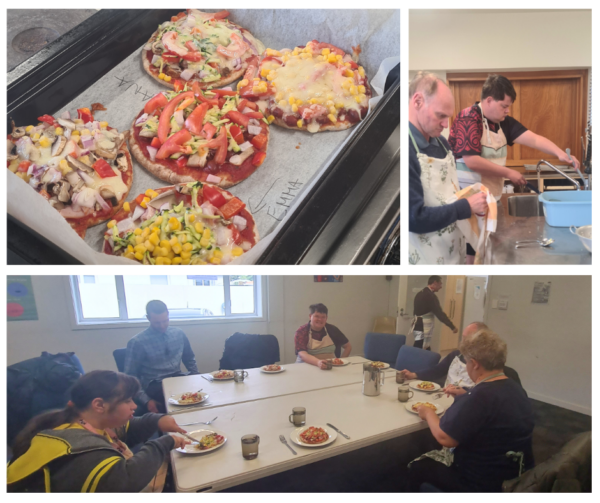
While waiting for their meals to cook, learners will set the table making sure to account for how things will be plated, and that all the crockery and drinks are ready so they can enjoy their meal together. Hōhepa Community Participation Facilitator, Aaron Randall, says that “The course supports our whaiora to develop their culinary and hospitality skills and compliments other skill-building activities our people do throughout the week, for example undertaking barista training or developing radio/broadcasting skills. Partnering with Risingholme on a course such as this supports the work we do at Hōhepa to deliver on our vision of ‘every life fully lived’. When I stopped by one of the cooking classes, I could clearly see people enjoying themselves and fully engaged in the process which was awesome!”
The classes make use of the excellent kitchen facilities provided in kind by the Linwood Avenue Community Corner Trust. “They’ve been instrumental in making this course possible by enabling us to use their kitchen”, notes Megson. “For one, kitchen facilities, especially ones with multiple ovens and ample bench-space, are difficult to find for use during the day. Additionally, the fact they have kindly waived a room-hire fee has helped keep course costs down and affordable for learners, particularly as the cost for food ingredients has gone up. We are very grateful for their generosity and support of this mahi.”
Takeaways
A cooking course can be particularly transformative because it goes beyond creating a product. Learning how and what to cook supports independent decision making, increases autonomy, and helps build and reinforce self-esteem through repeated learning. Both Megson and Randall agree that the course—like a great dish—hits the spot.
This course has been “a great opportunity for learners to develop fundamental skills so that they can gain more independence while continuing to foster their enjoyment of making food.” It has also helped reinforce the collaborative spirit that drives the success of the ACE sector in Ōtautahi, adds Megson. “Working with other organisations that share your values makes it easier to deliver meaningful opportunities for learners that genuinely support community needs.”
As a result of this pilot course, Risingholme is pleased to offer a Cooking Accessible course in Term 2, opening up this course to learners beyond Hōhepa.