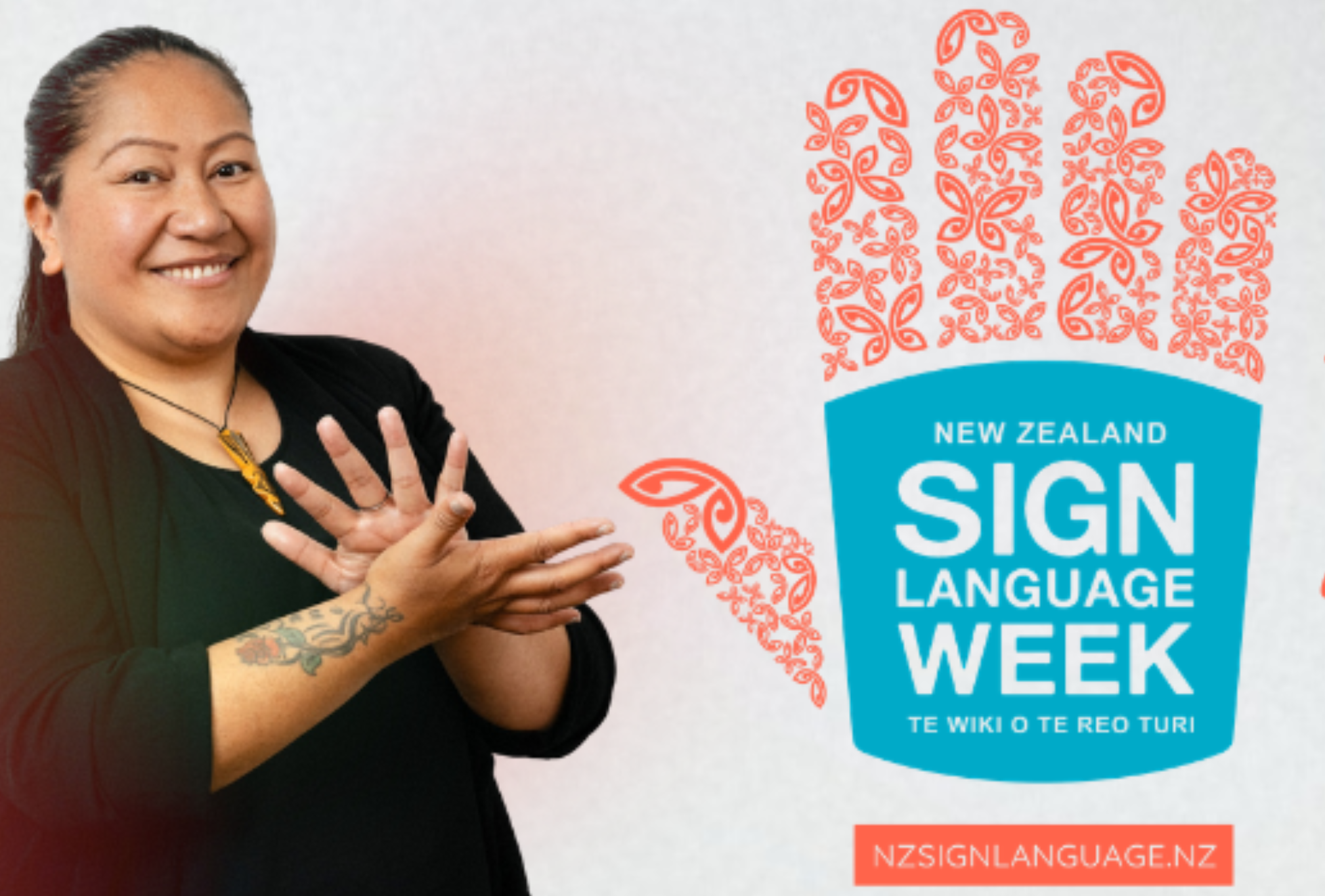
Realising the vision of an Aotearoa where anyone can sign anywhere begins with a first sign.
2026 marks 20 years since New Zealand Sign Language (NZSL) was recognised as an official language of Aotearoa. This milestone acknowledges many decades of advocacy and collective work to affirm NZSL as a living language and ensures it continues to grow. “NZSL is part of Aotearoa’s identity,” says Lachlan Keating, Chief Executive of Deaf Aotearoa. Reflecting on the collaborative effort that has enabled NZSL to reach this significant milestone and on what’s next for the future of NZSL, Keating explains that “this legacy sits in our hands now. Allyship means moving beyond awareness to action – embedding NZSL into everyday spaces, systems, and decision making.”
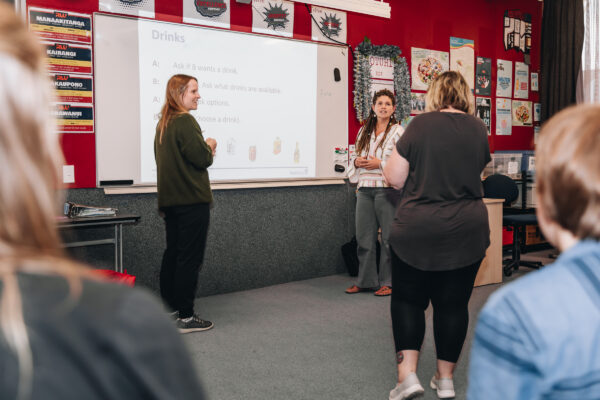
Risingholme has been part of this journey by doing exactly that: offering opportunities for people to learn NZSL so they feel more confident to use it in their everyday, be that in work, study, or with friends, whānau, and strangers. The recognition of NZSL as an official language resulted in an increased interest in learning it, and Risingholme has seen considerable growth in NZSL as a core and valued part of its learning programme. In fact, in the last 7 years alone, Risingholme has offered over 100 NZSL courses and has helped thousands of learners along on their language journey.
Risingholme’s Director Lynda Megson agrees with Keating about the importance of seeing NZSL being incorporated across different areas in daily life. “Community education is about ensuring people continue to have access to lifelong learning opportunities. Our NZSL courses have been going for years and years because there is still a need and a want to learn to sign, but also because we’ve made it easy to give it a go. Learning a language can be hard but the small, informal, face-to-face learning environment we offer does make it feel less daunting for many of our learners”.
For Risingholme’s learners, each one has their own reason for choosing to learn NZSL. For some, it’s about normalising the language and sharing their knowledge with future generations; as one learner shared, “I’m a preschool teacher and would like to learn words and phrases to use with the tamariki”. For others, the motivation is much broader and as simple as “so I can communicate better.”
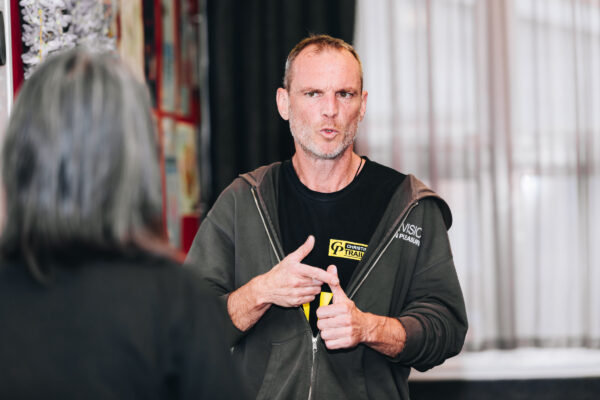
An Invitation to Learn
This New Zealand Sign Language Week, we celebrate the language and the many learners who have been, are, and will be a part of its past, present, and future.
Risingholme continues to nurture NZSL in the adult community education sector through courses. Irrespective of whether you’re signing your first word or continuing a learning journey, learning NZSL is one way to contribute to building an Aotearoa where anyone can sign. An inclusive Aotearoa is not built through awareness weeks alone. It is built through everyday choices to learn, to practice, to include, and to keep curious.
If you’re looking to take that first (or next) step, take a look at Risingholme’s courses which range from total beginners through to intermediate following the NZSL official curriculum.
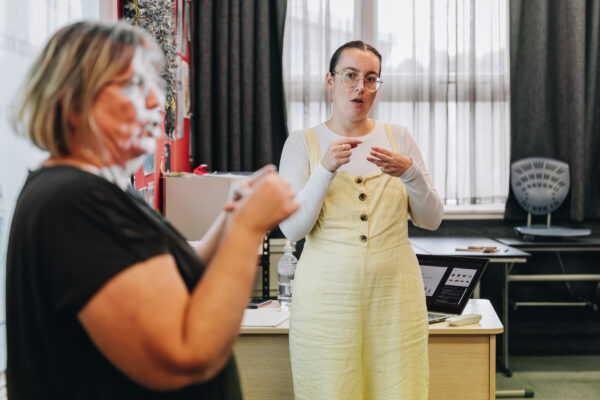
NZ Sign Language Level 1a – An introductory course that introduces the foundations of NZSL as a visual language, alongside Deaf awareness and culture. Learners build practical skills through everyday signs, greetings, simple sentences to gain confidence using NZSL in real‑life situations.
NZ Sign Language Level 1b – This builds on the foundations of the Level 1a
course. Topics covered include conversations about family and friends, and everyday activities.
NZ Sign Language Level 1c – Stepping up from Level 1b, this course continues to build confidence in conversing and focuses on topics like making small talk, giving compliments, and how to initiate and close off conversations. Other topics covered include community and work subjects such as communicating about essential services, describing occupations, and navigating transactions and bookings using NZSL.
NZ Sign Language Level 1d – This course builds on the learnings of Level 1c giving more opportunity to build conversation skills and focus on topics such as place, events and celebrations.
Once you have mastered Level 1 and feel ready to extend your skills further then you can progress to Level 2 which again is divided into four courses – Level 2a through to 2d.
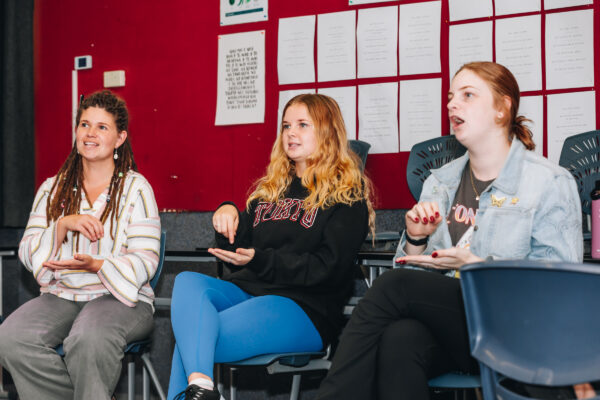
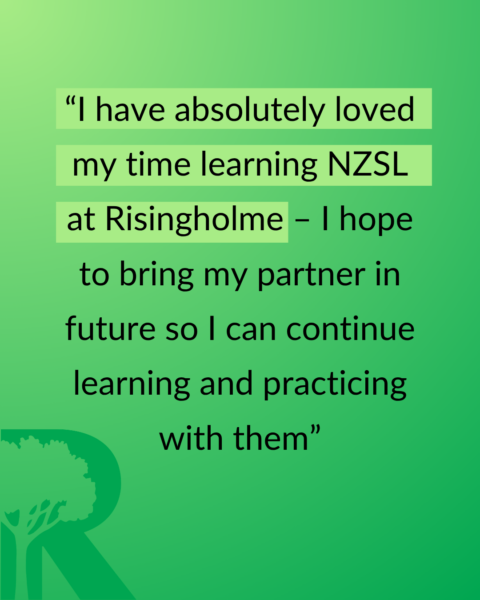
Here is what some learners have said about their NZSL courses at Risingholme.